
Flood Insurance in Huntington Beach: What Homeowners Should Check Before Winter Rain
A practical Huntington Beach homeowner’s guide to flood insurance: distinguish water-damage claims, compare NFIP and private coverage, and check limits and waiting periods before winter rain.
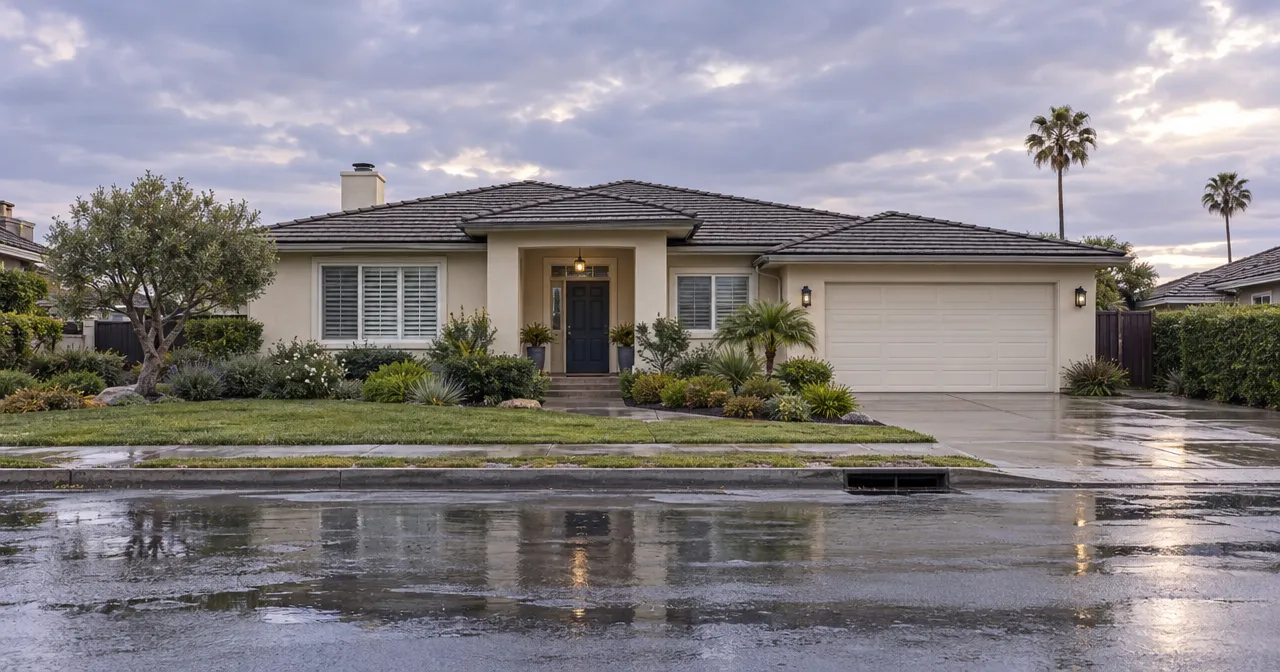
A Huntington Beach homeowner notices water collecting along the curb during a heavy rain and asks a reasonable question: “If that water reaches my front door, doesn’t my home insurance cover it?” The answer usually depends on how the water entered and whether the household has a separate flood policy—not simply on whether the damage happened during a storm.
For a family managing a mortgage, childcare, and home-maintenance expenses, that distinction affects more than repair bills. It determines which policy might respond, how much of the building and belongings are insured, and what expenses the family may need to fund itself. Here is a practical way to review flood insurance in Huntington Beach before the next winter storm rather than while one is approaching.
Flood damage and other water damage are different insurance questions
Standard homeowners insurance generally excludes flood damage. But “water damage” is not one uniform category. The California Department of Insurance’s residential claims guidance explains that storm-related roof damage, resulting interior damage, and flood damage can involve different coverage decisions.
Consider three hypothetical situations:
- A windstorm damages the roof, allowing rain inside. Ask the homeowners insurer how the covered cause of loss, roof condition, and policy wording affect the claim. The fact that rain was involved does not automatically make it a flood claim.
- Runoff spreads across neighboring properties and enters the house at ground level. That is a situation to evaluate under flood coverage, not an assumption that the homeowners policy will pay.
- A sewer backs up without a general flood. Do not assume a flood policy covers it. Review any water-backup endorsement and its conditions separately.
For the National Flood Insurance Program (NFIP), the ordinary inundation definition involves a temporary condition covering normally dry land on two or more acres or two or more properties, one of which is yours. The policy also addresses specific flood causes and conditions. A puddle in one room or every instance of water beneath a floor is not automatically an insured flood.
The useful question is: Where did the water originate, how did it enter, and which policy addresses that cause? Ask your agent to explain the distinction before a loss. Actual coverage depends on the policy and the facts, not the label a homeowner uses when describing the damage.
Review your address, not just your distance from the beach
Huntington Beach’s flood-preparedness information identifies low elevation and drainage challenges during high tides as local concerns. It notes particular street-flooding concerns in parts of Sunset Beach and Huntington Harbour. That is a reason to investigate a property’s setting, not evidence that every Huntington Beach home has the same risk.
Start with the current FEMA flood map for the actual address. Ask which flood zone applies to the building and whether a lender has imposed an insurance requirement. Then broaden the conversation: Does the lot sit below the street? Where does runoff collect? Has a previous owner disclosed flooding? Are important systems or belongings stored at ground level?
Being outside a mapped high-risk area does not mean flooding is impossible. Likewise, the absence of a lender requirement does not establish that a household could comfortably absorb a loss. Treat the map as one part of the review rather than an all-clear signal.
If a mortgage servicer requires flood insurance, obtain its requirements in writing. Separate the amount needed to satisfy the lender from the amount of protection you want for the home and your belongings.
Building coverage does not automatically insure your belongings
The NFIP separates building coverage from personal-property coverage. Its current coverage overview lists maximum homeowner limits of $250,000 for the building and $100,000 for contents. Check what was actually purchased; seeing a flood-policy premium on an escrow statement does not tell you that both coverages are included.
Building coverage can address insured parts of the structure and qualifying systems, such as electrical and plumbing systems, a furnace, and certain installed items. Contents coverage addresses eligible belongings, such as furniture, clothing, and electronics. The policy determines how a particular item is classified, valued, and limited.
Imagine a family that bought building-only flood insurance when closing on its home. Years later, the downstairs rooms hold a sectional sofa, children’s furniture, computers, and a washer and dryer. The family should not assume that insuring the house also insured everything inside it. Ask for a separate contents review and check the policy’s treatment of individual categories.
Review the deductibles too. Under NFIP coverage, building and contents deductibles apply separately. If one flood damages both, the household may be responsible for both deductibles. When comparing proposals, write down the potential combined out-of-pocket amount—not just the smaller number displayed first.
Compare the flood limit with rebuilding costs, not the mortgage balance
A flood policy’s building limit is a ceiling on covered payments, subject to policy terms. It is not a promise to rebuild the entire home regardless of cost. This matters when a home’s estimated reconstruction cost exceeds the available primary flood limit.
Consider a purely hypothetical Huntington Beach home with a $900,000 reconstruction estimate and $250,000 of NFIP building coverage. The $650,000 difference is a limit-planning issue, not a prediction that the family will experience a total loss or that every flood would exhaust the policy. A smaller covered loss might fit within the limit. A severe loss could leave substantial uninsured costs.
For a useful comparison, put three numbers beside each other:
- The current estimate to reconstruct the building, excluding land value.
- The proposed flood building limit.
- The amount of loss the household could realistically fund without disrupting other financial goals.
If those numbers reveal an uncomfortable gap, ask whether a higher-limit private flood policy or excess flood coverage is available for the property. Do not assume either option is automatically offered or suitable. Review eligibility, underlying-policy requirements, deductibles, and the actual coverage forms.
Understand replacement cost, depreciation, and what a settlement measures
Two proposals with similar limits can still value damaged property differently. Replacement cost and actual cash value are not interchangeable. Actual cash value takes depreciation into account; replacement-cost treatment is subject to the policy’s eligibility and settlement conditions.
FEMA’s NFIP Summary of Coverage explains that replacement-cost treatment for an eligible single-family principal residence generally requires building insurance of at least 80% of full replacement cost or the maximum available under NFIP, whichever is less. Other conditions apply. NFIP contents are settled at actual cash value, subject to limits and exclusions.
That means an older sofa’s insured value may be less than the price of a new replacement. For planning purposes, do not equate “$100,000 of contents coverage” with a promise to replace every belonging with a new item.
Ask your agent to explain the settlement basis for your home’s occupancy and the belongings you care about. Disclose a secondary home, rental use, or an anticipated occupancy change rather than assuming every residence receives the same treatment.
Budget separately for temporary housing and excluded property
A flood can make a home difficult to live in even when the insured repair estimate is within the policy limit. NFIP does not cover additional living expenses, such as temporary housing. Do not assume the homeowners policy’s loss-of-use coverage fills that gap when the underlying cause is an excluded flood.
For a family with school-age children, the practical questions include where everyone could stay, whether the arrangement works for school and work, and how many months the household could afford it. Those are budgeting questions to address alongside the building deductible. If comparing private flood coverage, ask whether temporary living expenses are included and what dollar or time limits apply.
NFIP also excludes various items outside the building, including landscaping, decks, fences, and swimming pools. Basement coverage is restricted. Do not interpret a declarations page’s large building limit as coverage for every feature on the property.
Make a short list of expensive or important features: outdoor improvements, stored belongings, lower-level rooms, and detached structures. Ask what is covered, excluded, or subject to a separate limitation. A written answer tied to the policy is more useful than a general assurance that the home “has flood insurance.”
Compare NFIP and private flood policies on more than price
NFIP coverage can be purchased through participating insurers and agents; buying it from a familiar insurance company does not necessarily make it a privately designed flood contract. Ask which program and policy form a proposal uses.
The National Association of Insurance Commissioners’ flood-insurance overview notes that private insurers may offer alternatives with different features, including higher limits. Private coverage is not automatically broader in every respect, however. Compare the actual proposal rather than choosing by the program label.
Request a side-by-side explanation of:
- Limits: Building, contents, and any separate limits for particular property.
- Deductibles: Dollar or percentage amounts, what each applies to, and whether more than one can apply to a loss.
- Settlement: Replacement cost or actual cash value, with eligibility conditions.
- Living expenses: Whether temporary housing is covered, and for how much and how long.
- Exclusions: Treatment of water backup, below-grade areas, detached structures, and outdoor property.
- Policy administration: Effective date, waiting period, renewal terms, cancellation provisions, and claims contact information.
If the lender requires coverage, have it confirm that the proposed private policy meets its requirements before replacing an existing policy. Ask about the consequences of leaving NFIP and later returning. Do not cancel the old coverage merely because a new quote looks attractive; confirm that the replacement has been accepted, paid for as required, and made effective.
Do not wait for a storm forecast to check the start date
NFIP generally has a 30-day waiting period before a newly purchased policy takes effect, with exceptions for qualifying circumstances. FEMA’s guidance on buying a flood policy explains exceptions involving certain loan transactions, map changes, and other specified situations. Simply seeing a storm forecast is not an exception.
Private policies can have different waiting periods. Ask for the actual effective date and any restrictions affecting when coverage can begin. An application, payment receipt, or verbal discussion should not be treated as confirmation that coverage is already in force.
For example, if a family starts shopping only a few days before expected heavy rain, a standard new NFIP purchase would not ordinarily provide immediate protection for that approaching event. The practical next step is to discuss available terms honestly—not to assume an agent can backdate coverage or waive a program rule.
Bring a complete property file to the review
You do not need to arrive knowing the policy language. You do need enough information to compare coverage for the same property and circumstances. Gather:
- Current homeowners and flood declarations, plus relevant endorsements.
- The lender’s written flood-insurance requirements, if any.
- The latest reconstruction estimate and details of substantial renovations.
- Building information, occupancy, and any elevation certificate already available.
- Known flooding or water-loss history, described accurately.
- Photos or an inventory of furniture, appliances, electronics, and other belongings.
- A realistic emergency-fund figure for deductibles, temporary lodging, and excluded property.
Then ask the agent to walk through one scenario: Water enters the ground floor, damages building finishes and belongings, and forces the family to stay elsewhere. Which policy addresses each expense? Which deductible applies? How are old items valued? What remains outside coverage?
This exercise is not a request for a guaranteed claim outcome. It is a way to identify assumptions before they become expensive surprises. If an answer depends on an endorsement or exclusion, ask to see that part of the contract.
Put flood coverage into the household’s insurance review
Flood insurance should be reviewed alongside homeowners coverage, but it needs its own decisions about limits, belongings, deductibles, and the effective date. A recent move, renovation, growing family, or change from primary residence to rental use is a good reason to revisit those choices.
J G Petit Insurance Agency is an independent, family-owned agency based in Huntington Beach. Its team compares options across carriers and explains coverage tradeoffs around each household’s circumstances. For a personalized review of homeowners and flood insurance, bring your current policies and property details to a consultation. The goal is a clear understanding of what is insured, what is not, and what your family would need to fund itself.
This article provides general insurance information, not a coverage determination or legal advice. Policy wording, eligibility, limits, deductibles, and the facts of a loss control coverage. Availability and lender requirements should be confirmed for the individual property.